Render
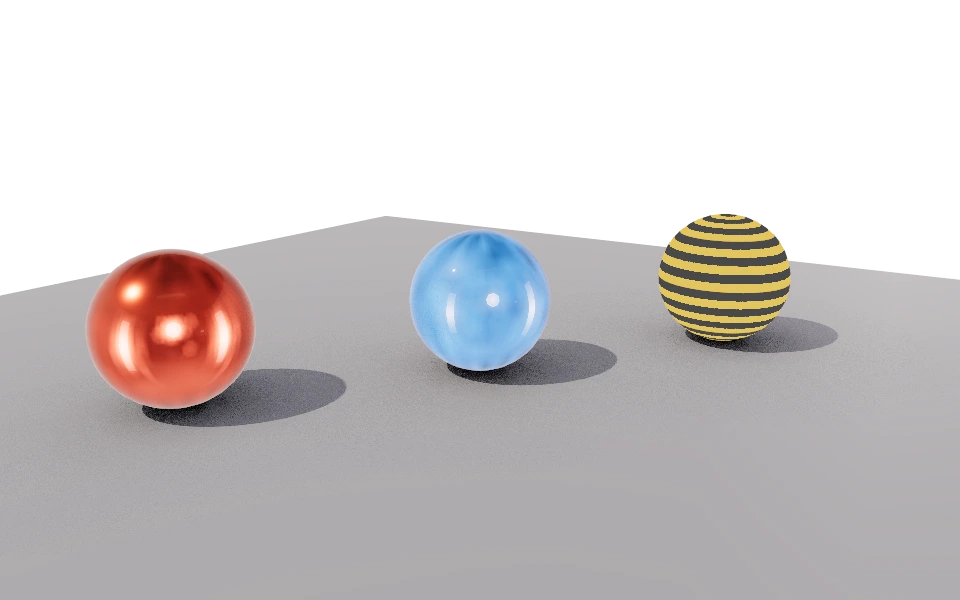
The Render mode draws the scene on the CPU, with no help from the graphics card. It walks the geometry of the project in rectangular buckets spread across the processor cores, and each bucket finishes its samples before it shows up on screen.
While the viewport shows a real time approximation, here every pixel is computed once, with ray traced shadows, indirect light, lens blur and camera effects. This is the image that leaves the editor for a presentation, a store page or a portfolio.
The side panel holds the controls, grouped into sections. Each section has its own page, with the before and after of what it changes. You can pause and resume at any time; moving the camera or touching a control starts the image over.
Definitions
The panel settings make up a Render definition, saved in the project. A project can hold as many definitions as you want, such as a quick preview and a final version, and the selector at the top of the panel switches between them. Every change to the controls is stored in the chosen definition, and everyone who opens the project sees the same definitions. People who can only view the project are free to switch and experiment, but nothing they change is saved.
Limits
GLSL and material support is partial. A shader operation that is not implemented yet stops the image with an error instead of drawing something wrong.
Water computes waves, foam, reflection, refraction and spray on the CPU. Entering render mode continues the simulation from the state it had in the viewport, foam and wake history included. It is recomputed only when the simulation parameters change, and that can take a few minutes.
Menus
File
- Save Frame (PNG): Saves the image with the buckets finished so far, including the transparent background when it is selected.
In this section
- QualitySamples, bucket size and image resolution.
- EnvironmentThe HDRI image that lights, reflects and can become the background.
- Depth of fieldLens blur, with a focus plane and an aperture.
- ShadowsRay traced shadows, from a hard edge to a wide penumbra.
- Global illuminationIndirect light, bounces and color bleeding between surfaces.
- Ambient occlusionDarkens corners and contacts where the ambient light cannot reach.
- FogTints distant surfaces with a color and creates depth.
- VignetteDarkens the edges and pulls the eye to the center.
- Film grainFine noise over the final image, instead of a spotless finish.
- ColorTone mapping and exposure, from the computation to the screen.