Edge Wear
Adds geometry and irregular chips near sharp edges.
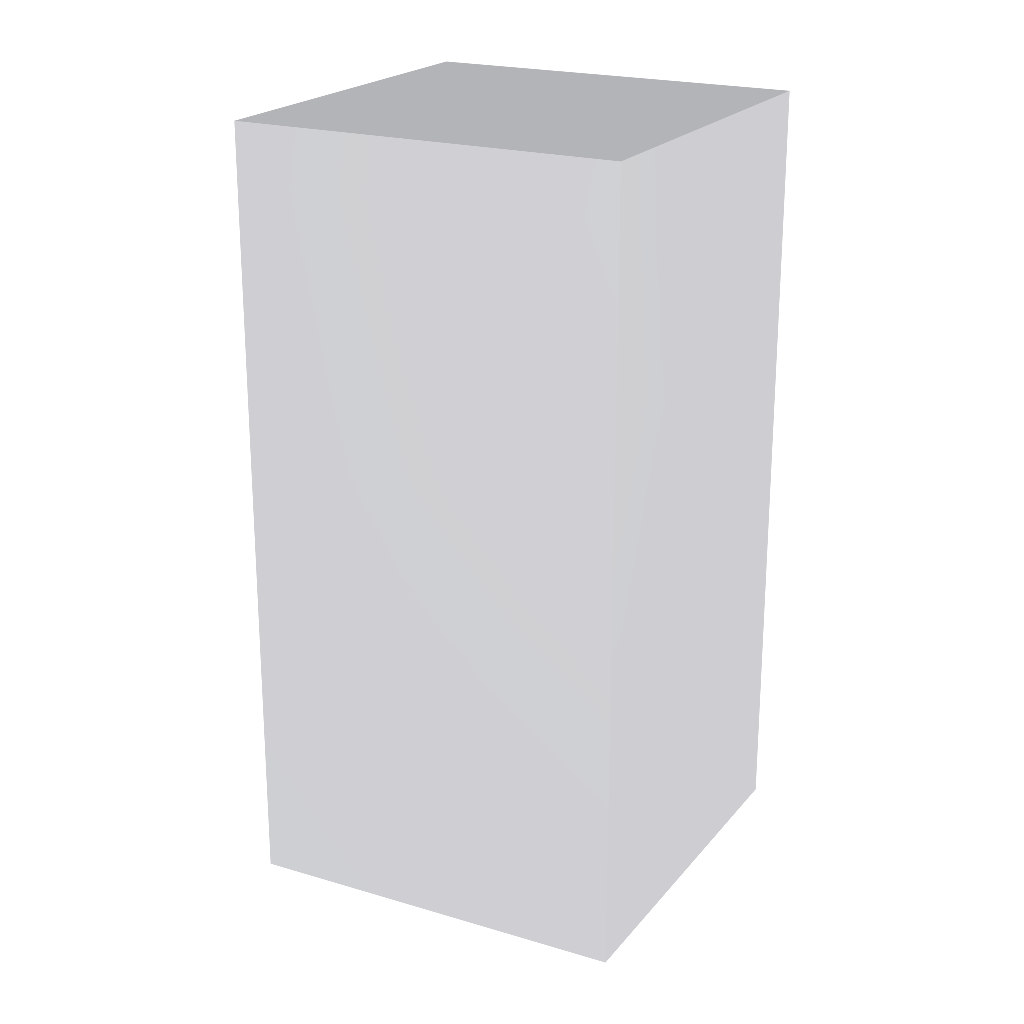
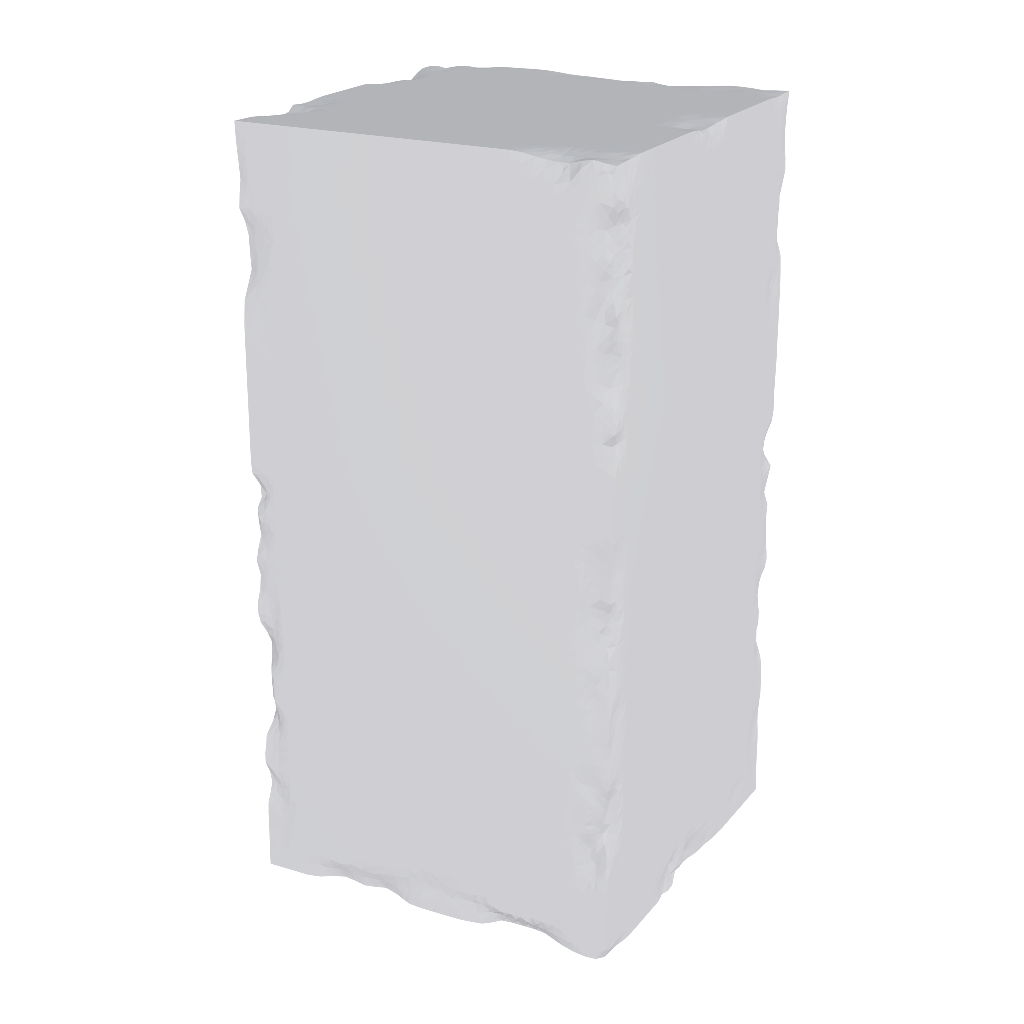
Edge Wear adds vertices near sharp edges and displaces the surface inward with seeded noise. It works on a simple cube without prior subdivision. Face interiors outside the configured width remain unchanged.
Create the effector and place geometry beneath it in the hierarchy. Open boundaries receive wear too; coplanar diagonals are ignored.
Wear alternates intact stretches with clusters of differently sized chips. The affected width varies along each edge, with asymmetric cuts on its two sides.
Properties
- Width: distance affected around edges, in local units.
- Depth: chip intensity, limited to 45% of the width to avoid folds in the band.
- Detail: controls added vertices near edges. Higher values take more processing.
- Chip frequency: higher values make smaller, closer irregularities. Increase detail to resolve small chips.
- Minimum angle: selects edges by the angle between their faces; increase it to preserve smooth transitions.
- Seed: changes the pattern reproducibly.
Zero width or depth disables the effect. Child materials and UV coordinates are preserved, with interpolation at new vertices. Open and closed manifold meshes are supported. Output is limited to 200,000 triangles; reduce detail or width if the limit is exceeded.